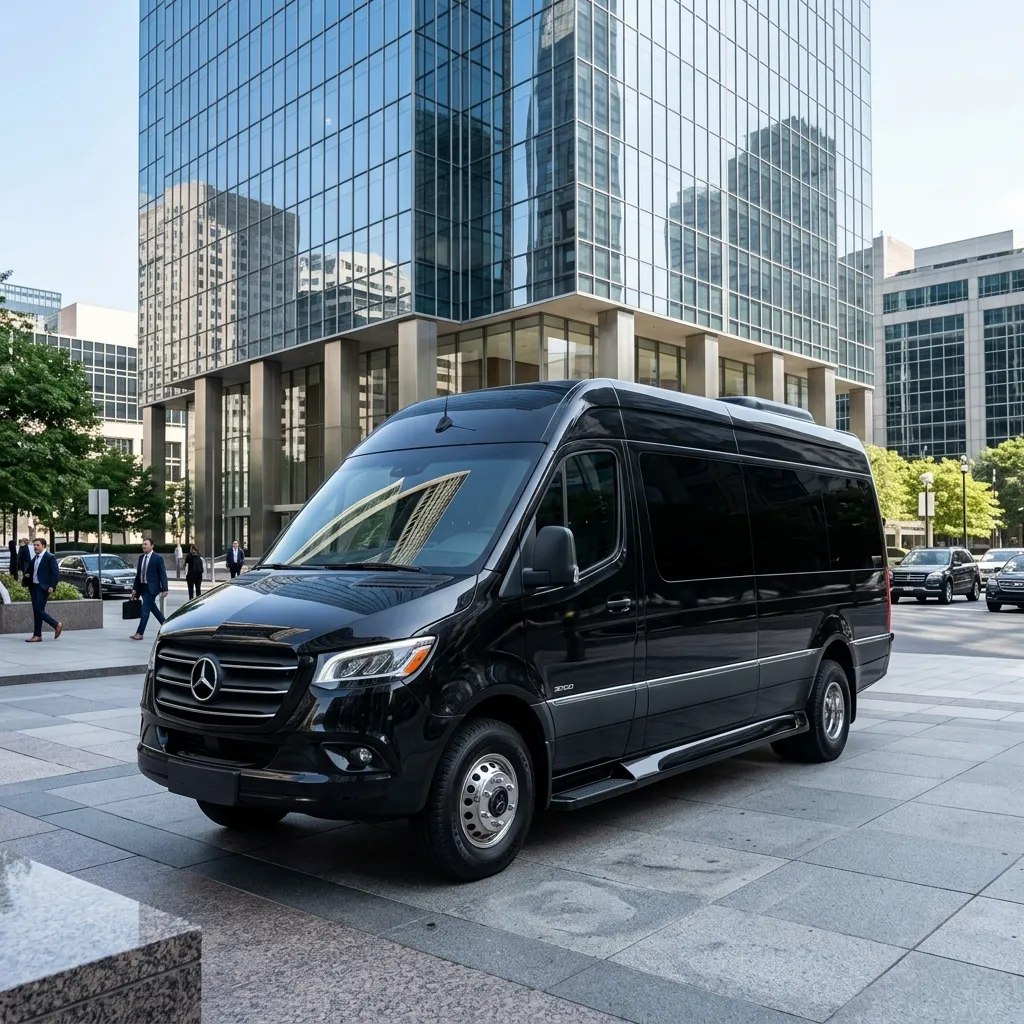
Florida Event Transportation — Conferences, Galas, Concerts, Group Logistics
Miami Beach CC · OCCC · Tampa CC · Hard Rock · The Breakers · Vizcaya
Multi-vehicle event transportation built around a venue-specific plan, not one-off bookings. On-site coordinator at the venue from 60 minutes before the first pickup through the last departure. Hotel-to-venue shuttle loops on published intervals. Dedicated VIP and speaker vehicles tracked in real time. Post-event ride staging that clears a 300-guest departure in 15 minutes. Sedans, SUVs, and Mercedes-Benz Sprinters scaled to the event with contingency capacity reserved on every plan.
What event transportation actually means in Florida
Event transportation is multi-vehicle ground logistics with an on-site coordinator, built around a venue-specific plan rather than a collection of individual ride bookings. The planning process starts weeks before the event and produces a written document that covers vehicle assignments, driver schedules, staging locations, shuttle intervals, VIP movements, and contingency scenarios. On event day, a coordinator stations at the venue and communicates with the event manager, dispatch, and every driver on a shared channel.
The operational difference between event transportation and booking ten separate cars is coordination. When a keynote speaker at a Tampa Convention Center conference needs a vehicle in two minutes, it is already repositioning from valet because the coordinator is tracking it. When 300 guests leave a gala at Vizcaya at 11 PM, vehicles are pre-staged by destination and guests walk to color-coded signs rather than searching a parking lot. When a Miami Beach Convention Center shuttle loop is running full, the coordinator spot-counts and dispatch adds a vehicle within 15 minutes.
Fleet scales to the event. A 30-person executive dinner uses five Luxury Sedans staged at valet. A 500-person corporate conference uses a dozen Mercedes-Benz Sprinters on rotating hotel-to-venue loops plus dedicated Executive SUVs for keynote speakers and sponsor executives. A wedding with 150 guests across three hotels uses three or four Sprinters on timed loops before and after the ceremony. A multi-day trade show or corporate incentive trip uses 20-40 vehicles running from noon through 3 AM. The transportation plan is built around the event agenda — not the other way around.
Event types we cover across Florida
Each event type has its own logistics pattern. The planning call identifies which pattern applies and the transportation plan is built accordingly.
Corporate Conferences
Multi-day events at the Miami Beach Convention Center, OCCC, and Tampa Convention Center. Hotel-to-venue shuttle loops on published intervals, VIP and speaker transport, branded signage, and post-session airport runs. Three to fifteen Sprinters plus dedicated SUVs for executives.
Product Launches
Invite-only events at private venues, rooftop spaces, and hotels across Miami, Orlando, and Tampa. Controlled arrival timing so guests arrive within a 20-minute window for the reveal. Post-event departures staged to match the production schedule. Branded vehicle signage for sponsor visibility.
Galas and Fundraisers
Black-tie events at The Breakers, Fontainebleau, Vizcaya, PAMM, and the Adrienne Arsht Center. Arrival staging matched to valet capacity so the entrance is not bottlenecked. Post-event dispatch by destination hotel with the coordinator managing guest flow at the exit.
Wedding Guest Shuttles
Group logistics for 80-200 guests across multiple hotels. Timed loops before the ceremony so guests are seated before the processional. Post-reception departures at midnight with the coordinator managing flow. This is the group shuttle side — separate from the bridal-party vehicle.
Concerts and Sports Events
High-volume departures at Hard Rock Stadium, Amalie Arena, Kaseya Center, and Camping World Stadium. Pre-staged vehicles by gate assignment. VIP vehicles inside the premium lot. Coordinator manages wave-based departures to clear 500+ guests within 20 minutes.
Trade Shows
Multi-day exhibit events at the OCCC and Miami Beach Convention Center. Shuttle loops running 12-14 hours daily between the convention center and hotel corridors on International Drive, Collins Avenue, and downtown Tampa. Setup-day transport for exhibitor teams with equipment.
Private Estate Celebrations
Milestone birthdays, anniversaries, and family events at private homes and estate venues in Palm Beach, Coral Gables, Fisher Island, and Star Island. Vehicle access through gated communities coordinated with the property manager. Post-event departures staged on the estate driveway with no street queuing.
Holiday Parties
Annual corporate holiday events at restaurants, hotel ballrooms, and private venues across Florida. Shuttle loops from the office to the venue and back. Post-party departures managed so guests leave safely. Alcohol-adjacent events benefit from coordinated group transport rather than individual ride-hailing.
Florida venues we serve — loading zones and staging specifics
Each venue has its own vehicle access rules, staging areas, and departure patterns. The on-site coordinator knows them before event day because the site visit documents them.
Miami Beach Convention Center
Miami Beach · 500,000 sq ft of exhibit space; up to 20,000 attendees
Loading zone and vehicle access
Ground transportation staging on Convention Center Drive. Commercial vehicles queue at the east-side loading dock for large-vehicle access. Miami Beach has specific chauffeur-waiting rules on Collins Avenue — vehicles cannot idle curbside and must rotate through the staging area.
Staging and departure notes
Post-event departures route through the Convention Center Drive exit. Coordinator positions color-coded shuttle signs at Column A (Fontainebleau block), Column B (Loews block), and Column C (overflow hotels). Police detail manages the Collins Avenue intersection during large-show load-out.
Orange County Convention Center (OCCC)
Orlando · 7 million sq ft total campus; West Concourse and North/South Concourses
Loading zone and vehicle access
Separate loading at the West Concourse (International Drive side) and the North/South Concourses (Universal Boulevard side). Shuttle routes must account for the half-mile distance between concourses. Commercial vehicle staging is on the west surface lot near the Rosen Centre.
Staging and departure notes
OCCC events often run across multiple halls simultaneously. Shuttle loops to the International Drive hotel corridor use the West Concourse exit. Loops to the Lake Buena Vista hotel cluster use the South Concourse exit off Universal Boulevard. The coordinator manages two departure points when the event spans both concourses.
Tampa Convention Center
Tampa · 600,000 sq ft of meeting and exhibit space on the downtown waterfront
Loading zone and vehicle access
Commercial vehicle loading on Franklin Street and the east-side waterfront loop. Sprinter vans and larger vehicles use the marshalling area off Channelside Drive. The Convention Center shares the waterfront with the Tampa Marriott Waterside, allowing a walking-distance shuttle for that hotel block.
Staging and departure notes
Post-event staging aligns vehicles on the Franklin Street curb by destination — downtown hotel blocks, Westshore hotels, TPA airport runs. The waterfront loop clears faster than the Franklin Street exit during peak departure.
Hard Rock Stadium
Miami Gardens · 65,000 seats; home of Miami Dolphins, Miami Open, concerts, Formula 1 Miami Grand Prix
Loading zone and vehicle access
Chauffeur lot off NW 203rd Street, accessible from NW 27th Avenue. Vehicles stage in the designated commercial lot and reposition to the guest pickup zone at the east or west gate on coordinator signal. Standard parking-lot vehicular traffic makes pre-positioning essential.
Staging and departure notes
Post-event departures at Hard Rock are the highest-volume scenario we handle. The coordinator stages vehicles by gate assignment and deploys in waves as guests exit. VIP vehicles pre-position inside the premium lot off NW 199th Street. A 500-guest corporate hospitality departure typically clears in 20 minutes with staged dispatch.
Amalie Arena
Tampa · 20,500 seats; home of Tampa Bay Lightning, concerts, and large-scale events
Loading zone and vehicle access
Commercial vehicle staging on Channelside Drive east of the arena. VIP vehicles use the Jefferson Street entrance for backstage and suite-level pickups. The arena shares the Channelside district with multiple hotels and restaurants within walking distance.
Staging and departure notes
Concerts and Lightning games release crowds in a single wave. Vehicles pre-stage on Channelside Drive and deploy by destination group. The Marriott Waterside and Tampa Hilton Downtown blocks clear first because of walking proximity; vehicles for Westshore and TPA runs deploy second.
Kaseya Center
Miami · 19,600 seats; home of Miami Heat, concerts, and arena events on Biscayne Bay
Loading zone and vehicle access
Commercial vehicle staging on the NE 8th Street loop adjacent to the arena. Larger vehicles use the Biscayne Boulevard commercial lane. VIP pickups stage at the Port Boulevard entrance near the media and player lot.
Staging and departure notes
The Biscayne Bay waterfront location means post-event traffic merges onto I-395 and I-95. Coordinator routes hotel-block shuttles to the NE 8th Street exit for Brickell and Downtown hotels, and the Port Boulevard exit for Miami Beach hotels via the MacArthur Causeway.
The Breakers
Palm Beach · Flagship resort with ballroom, patio, and ocean-lawn event spaces
Loading zone and vehicle access
Vehicles pre-stage on the east motor court and the South County Road entrance. Valet coordinates commercial vehicle positioning. Loading-lane timing is controlled — vehicles rotate rather than queue to maintain the arrival aesthetic.
Staging and departure notes
Post-event departures split between the east motor court (hotel guests walking to rooms) and the South County Road exit (guests departing to PBI, Worth Avenue, or other Palm Beach addresses). The coordinator manages the valet hand-off so vehicles deploy in priority order rather than first-come.
Fontainebleau Miami Beach
Miami Beach · Ballrooms, poolside terraces, and the BleauLive Theater for 3,800+
Loading zone and vehicle access
Commercial vehicle staging on the Collins Avenue motor court. Large-vehicle access uses the Indian Creek Drive service entrance. The property manages commercial vehicle queuing tightly during peak event hours.
Staging and departure notes
The Fontainebleau is both a venue and a hotel block for Miami Beach Convention Center conferences. Shuttle loops between the Fontainebleau and the Convention Center run along Collins Avenue — a 5-minute drive that takes 12 minutes during peak convention traffic. Coordinator adjusts loop intervals based on Collins Avenue congestion.
Vizcaya Museum and Gardens
Miami · Historic estate venue for galas, fundraisers, and private events; 300–500 guests typical
Loading zone and vehicle access
Loading lane off South Miami Avenue with strict timing rules — vehicles rotate on coordinator signal rather than queuing. The property enforces specific arrival and departure windows to protect the historic grounds.
Staging and departure notes
Vizcaya galas are the signature post-event staging scenario in South Florida. The single loading lane means vehicles cannot mass-stage. The coordinator deploys vehicles one at a time in destination-priority order. A 300-guest departure with pre-staged vehicles clears in roughly 15 minutes versus 45+ without coordination.
Ringling Museum
Sarasota · Historic estate and museum campus with courtyard and gallery event spaces
Loading zone and vehicle access
Vehicle staging on the Bay Shore Road entrance loop. The museum grounds have limited commercial vehicle space, so vehicles rotate from the University Parkway overflow lot on coordinator radio.
Staging and departure notes
Sarasota events draw guests from Tampa (60–75 min), St. Pete (45 min), and local Longboat Key and Siesta Key hotels. Post-event departures split by destination corridor — northbound vehicles for Tampa, westbound for the barrier islands, and airport-bound for TPA and SRQ.
Perez Art Museum Miami (PAMM)
Miami · Waterfront event terraces and galleries on Biscayne Boulevard for 400–600 guests
Loading zone and vehicle access
Commercial vehicle staging on the Museum Park Drive loop. Larger vehicles use the NE 13th Street access road. The waterfront terrace events have a defined departure path through the Museum Park roundabout.
Staging and departure notes
PAMM galas and Art Basel satellite events generate concentrated departures between 10:30 PM and midnight. Vehicles stage on Museum Park Drive by destination — Brickell, Miami Beach, Coral Gables — and the coordinator walks guests to the correct zone.
Adrienne Arsht Center for the Performing Arts
Miami · 2,400-seat Ziff Ballet Opera House and 2,200-seat Knight Concert Hall
Loading zone and vehicle access
Vehicle staging on NE 2nd Avenue and the Biscayne Boulevard commercial lane. VIP pickups at the NE 14th Street private entrance. Valet operates at the main entrance on Biscayne Boulevard and coordinates with commercial vehicles.
Staging and departure notes
Performing arts events release in a single wave at curtain call. The coordinator pre-positions vehicles on NE 2nd Avenue 15 minutes before expected curtain. Guests exit to Biscayne Boulevard and are directed to the NE 2nd Avenue vehicle line by signage.
How event transportation works — four phases from planning to departure
Every event engagement follows the same four-phase process. The depth of each phase scales with event size, but the structure is the same for a 30-person dinner and a 1,000-person conference.
1
Intake
A planning call captures the event agenda, venue, guest count, hotel blocks, VIP list, and special needs — ADA-accessible vehicles, branded window cards, multiple drop-off points, or split departures. For events with 50+ guests, this call typically runs 30-45 minutes and results in a preliminary vehicle and driver estimate. Smaller events (executive dinners, speaker pickups) are scoped in a 15-minute call.
2
Site Visit
For events with three or more vehicles, the coordinator walks the venue with the event manager or planner. The walk identifies loading zones, staging areas, backup access routes, valet hand-off procedures, and any municipal or venue restrictions. Miami Beach has Collins Avenue waiting-zone rules. Vizcaya has strict loading-lane timing. Hard Rock Stadium uses the chauffeur lot off NW 203rd Street. OCCC has separate loading at the West Concourse and North/South Concourses. All of this is documented before the plan is written.
3
Plan Approval
The written transportation plan includes the vehicle list, driver assignments, minute-by-minute timeline, staging diagram, shuttle loop intervals, VIP vehicle tracking assignments, contingency scenarios, and the coordinator name and direct phone number. The planner reviews and approves. Revisions are common — adding a late-night shuttle loop, swapping a sedan for an SUV, adjusting the VIP pickup window by 15 minutes. The plan is finalized 48-72 hours before event day.
4
Day-of Execution
The coordinator arrives at the venue 60-90 minutes before the first scheduled pickup. Staging signs are placed, shuttle vehicles are positioned at departure points, VIP vehicles are confirmed at valet or the designated pickup zone. The coordinator communicates with the event manager on a shared channel and with every driver via dispatch radio. Schedule changes during the event — adding a shuttle loop, repositioning a VIP vehicle, extending standby — are handled in real time.
What every event transportation engagement includes
These ten operational features are standard on every event engagement of three or more vehicles.
Written Transportation Plan
A document delivered before event day with vehicle list, driver assignments, minute-by-minute timeline, staging diagram, shuttle intervals, and contingency scenarios. Reviewed with the planner and revised until approved. This is the operational backbone of every engagement.
On-Site Transportation Coordinator
A coordinator at the venue from 60-90 minutes before the first pickup through the last departure. Communicates with the event manager, dispatch, and every driver on a shared channel. Manages sign placement, guest flow, spot-counting, and real-time schedule adjustments.
Hotel-to-Venue Shuttle Loops
Published-interval shuttle service between hotel blocks and the venue. Branded window cards identify each shuttle. Guests board without tickets. The coordinator spot-counts each loop and dispatch adjusts frequency or adds vehicles if crowds shift between hotels.
VIP and Speaker Tracking
Dedicated vehicles assigned to keynote speakers, executives, and VIP guests are tracked individually from dispatch. The coordinator knows in real time which vehicle is on standby, which is en route, and which is at valet — so the planner gets a two-minute response when they need a VIP moved.
Post-Event Ride Staging
Vehicles pre-positioned by destination before the event ends. Guests walk to color-coded or numbered signs. The coordinator directs departure flow. A 300-guest departure clears in roughly 15 minutes versus 45+ without staging.
Contingency Capacity
One or two extra vehicles beyond the scheduled need are reserved on every plan. A mechanical issue, a delayed flight carrying a VIP speaker, or a last-minute schedule change is absorbed without cascading delays to the rest of the event transport.
Branded Window Cards and Signage
Event name, company logo, or custom messaging on vehicle window cards and driver name boards. Billed at cost and produced in-house. Standard for corporate conferences and product launches. Wedding signage includes ribbon and Just Married decoration.
Shared Communication Channel
The coordinator, dispatch, and all drivers operate on a shared radio or digital channel. The event planner has a direct line to the coordinator. No one needs to call individual drivers or relay messages through a call center. Changes propagate to every vehicle instantly.
Venue Walkthrough Documentation
Loading zones, staging areas, backup access routes, valet hand-off procedures, and municipal restrictions are documented during the site visit and incorporated into the plan. The coordinator arrives on event day already knowing the venue layout.
Real-Time Schedule Adjustment
The event agenda shifts — a panel runs 20 minutes long, dinner service is delayed, the keynote moves from 3 PM to 2 PM. The coordinator adjusts vehicle positioning and shuttle timing in real time through dispatch. No rebooking, no penalty, no calls to a reservation line.
How hotel-to-venue shuttle loops operate
Shuttle loops are the operational core of conference and convention transportation. The loop interval — every 10, 15, or 20 minutes — is set during the planning call based on guest volume, hotel-to-venue distance, and the event agenda. Shorter intervals for high-volume blocks, longer intervals for smaller or farther hotels.
A typical three-hotel conference at the Miami Beach Convention Center runs like this: Vehicle 1 departs the Fontainebleau at :00, Vehicle 2 departs the Loews at :00, Vehicle 3 departs the Convention Center at :00 and returns to the hotels in sequence. At 15-minute intervals with three Mercedes-Benz Sprinters (12 passengers each), the loop moves up to 144 passengers per hour across all three vehicles. A 500-guest conference with staggered session start times rarely needs all guests moving simultaneously, so three vehicles handle the load with room to spare.
Branded window cards on each shuttle display the event name, the hotel name, and the route (e.g., "Fontainebleau to Convention Center"). Guests board without tickets — the coordinator and drivers manage boarding. At each departure point, the coordinator or a designated driver spot-counts passengers boarding each loop. If the 9:00 AM loop from the Fontainebleau departs full and the 9:15 AM loop is also at capacity, dispatch adds a fourth vehicle within 15-30 minutes to absorb the overflow.
Capacity adjustment is continuous throughout the event. Morning loops before the opening keynote are the highest-volume window. Midday loops thin out as attendees are in sessions. Late-afternoon return loops spike again as sessions end. The coordinator adjusts by pulling vehicles off the rotation during low-demand windows and redeploying them when volume picks up. This keeps costs aligned with actual demand rather than running empty vehicles all day.
For OCCC events spanning both the West Concourse and the North/South Concourses, shuttle loops to the International Drive hotel corridor use the West Concourse exit, while loops to the Lake Buena Vista hotel cluster use the South Concourse exit off Universal Boulevard. The coordinator manages two departure points simultaneously when the event spans both concourses, with dispatch tracking each loop independently.
VIP and speaker transport — dedicated vehicles from airport to departure
VIP transport runs as dedicated vehicles assigned per person or per role for the duration of the event. A conference keynote speaker typically books one Executive SUV for the full engagement: airport pickup at MIA, FLL, TPA, or MCO with flight tracking and meet-and-greet at baggage claim, transfer to the hotel, hotel-to-venue for rehearsal and the session, venue-to-dinner, dinner-to-hotel, and hotel-to-airport for the return flight. The vehicle is on standby throughout, not shared or redeployed.
Sponsors and C-suite attendees at corporate conferences get their own vehicle on standby at valet. The coordinator tracks every VIP vehicle from dispatch and knows which is on standby, which is en route, and which is parked at valet. When the event planner radios that the CEO needs a vehicle at the north entrance in three minutes, the coordinator has already repositioned the SUV from the staging lot because the closing session is ending.
For multi-day conferences, VIP vehicles maintain the same chauffeur for the duration. The chauffeur learns the speaker's schedule, preferred pickup point, and timing preferences by day two. Real-time tracking means the event planner can check on any VIP vehicle's location through the coordinator without calling the driver directly.
Wedding couples get a decorated Luxury Sedan or Executive SUV. The chauffeur manages the couple's movement between ceremony, photos, and reception — arriving at each point exactly on the planner's timeline. The vehicle is exclusively theirs from the hotel departure through the reception send-off.
Post-event ride staging — the "300 guests leave at 11 PM" problem
Post-event departure is the most under-planned phase of most events and the one where coordinated transportation adds the most visible value. The scenario is universal: the event ends, 300 guests walk outside at the same time, and everyone wants to leave immediately. Without a plan, guests wait 30-45 minutes for vehicles that are scattered across a parking lot or stuck in a single-lane exit queue.
The staged departure method pre-positions vehicles by destination 30-45 minutes before the expected event end time. At a 300-guest gala at The Breakers, that means vehicles staged on the east motor court for hotel-bound guests and the South County Road exit for guests departing to PBI, Worth Avenue, or private addresses. At Vizcaya, the single loading lane requires one-at-a-time vehicle deployment, so the coordinator stages vehicles on South Miami Avenue and rotates them through the loading lane in destination-priority order.
Guests exit to a departure zone with color-coded or numbered signs: "Fontainebleau — Blue Sign," "Loews — Green Sign," "Airport — Orange Sign." The coordinator directs guest flow at the exit point and communicates with drivers via the shared channel. Vehicles deploy in priority order — the hotel closest to the venue departs first so those vehicles can return for a second run if needed, while farther destinations load simultaneously.
At Hard Rock Stadium, post-event departure is the highest-volume scenario. The coordinator stages vehicles by gate assignment and deploys in waves as sections of the crowd exit. VIP vehicles pre-position inside the premium lot off NW 199th Street. A 500-guest corporate hospitality departure at Hard Rock typically clears in 20 minutes with staged dispatch. The same departure without staging takes 45 minutes or longer because vehicles are trapped in the general parking exit.
Contingency vehicles handle overflow. If one destination group is larger than estimated — the Fontainebleau block had 30 more guests than the RSVP count — the contingency vehicle absorbs the excess without pulling a vehicle from another destination. The coordinator adjusts in real time and dispatch redirects the contingency vehicle to the highest-need departure point.
Vehicle selection for event transportation
Three vehicle classes cover every event scenario. The transportation plan specifies the exact mix based on guest count, venue access constraints, and VIP requirements.
Luxury Sedan
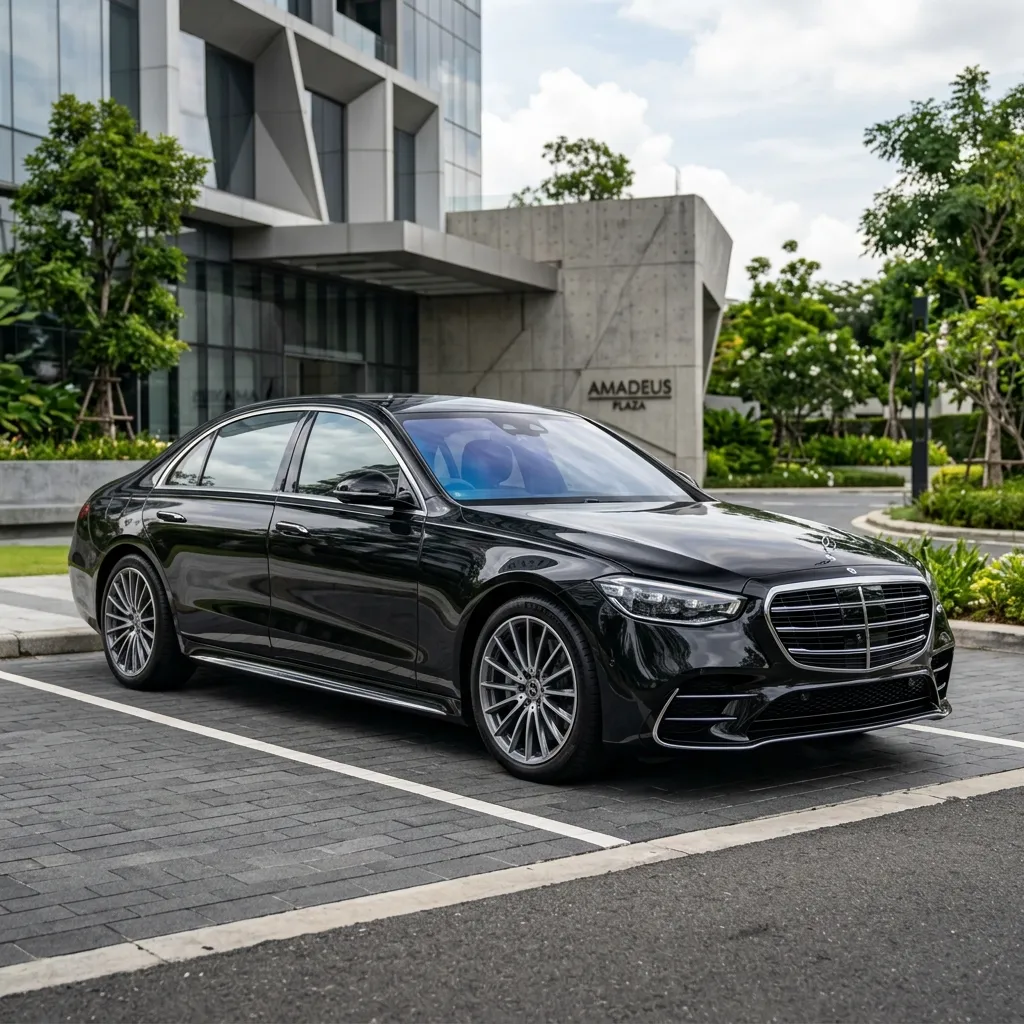
Mercedes-Benz S-Class / BMW 7 Series
3 passengers
3 full-size bags
Executive Sedan
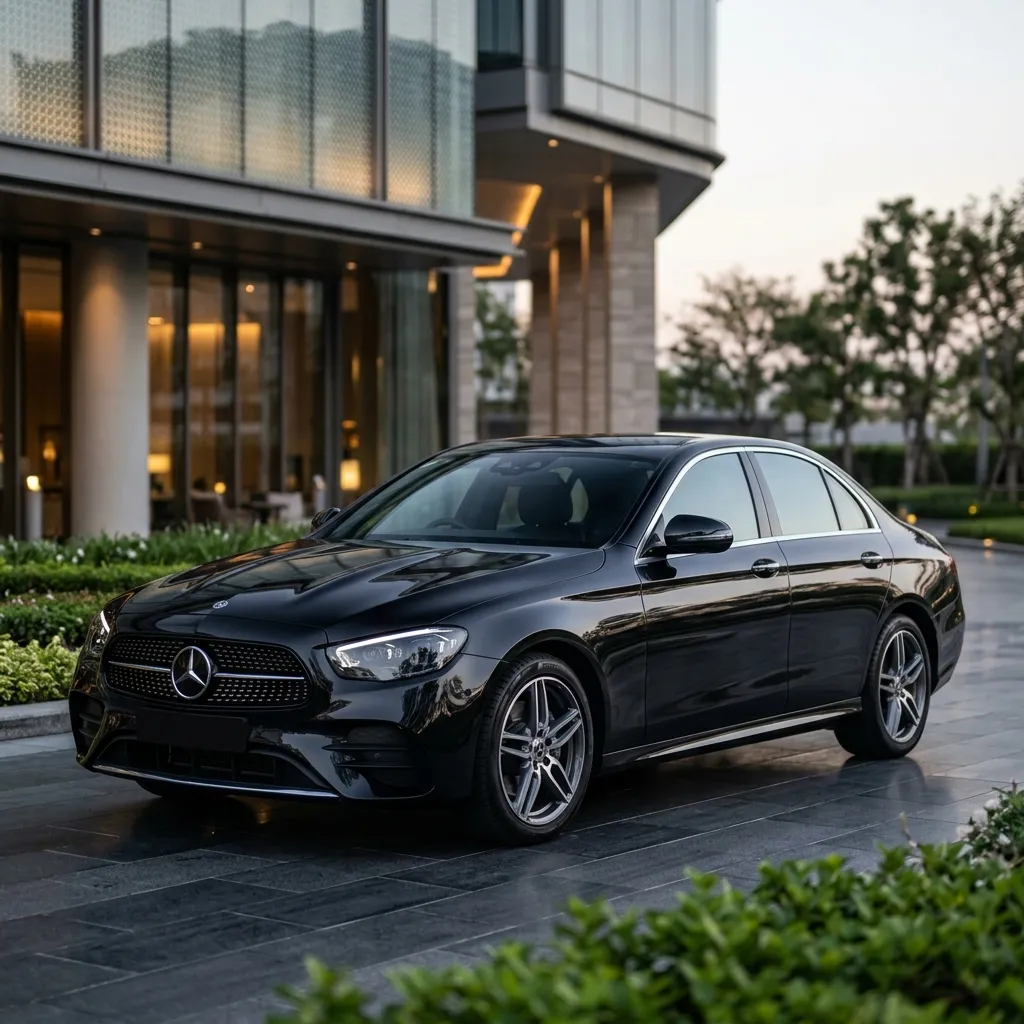
Mercedes-Benz E-Class / BMW 5 Series
4 passengers
3 full-size bags
Luxury SUV
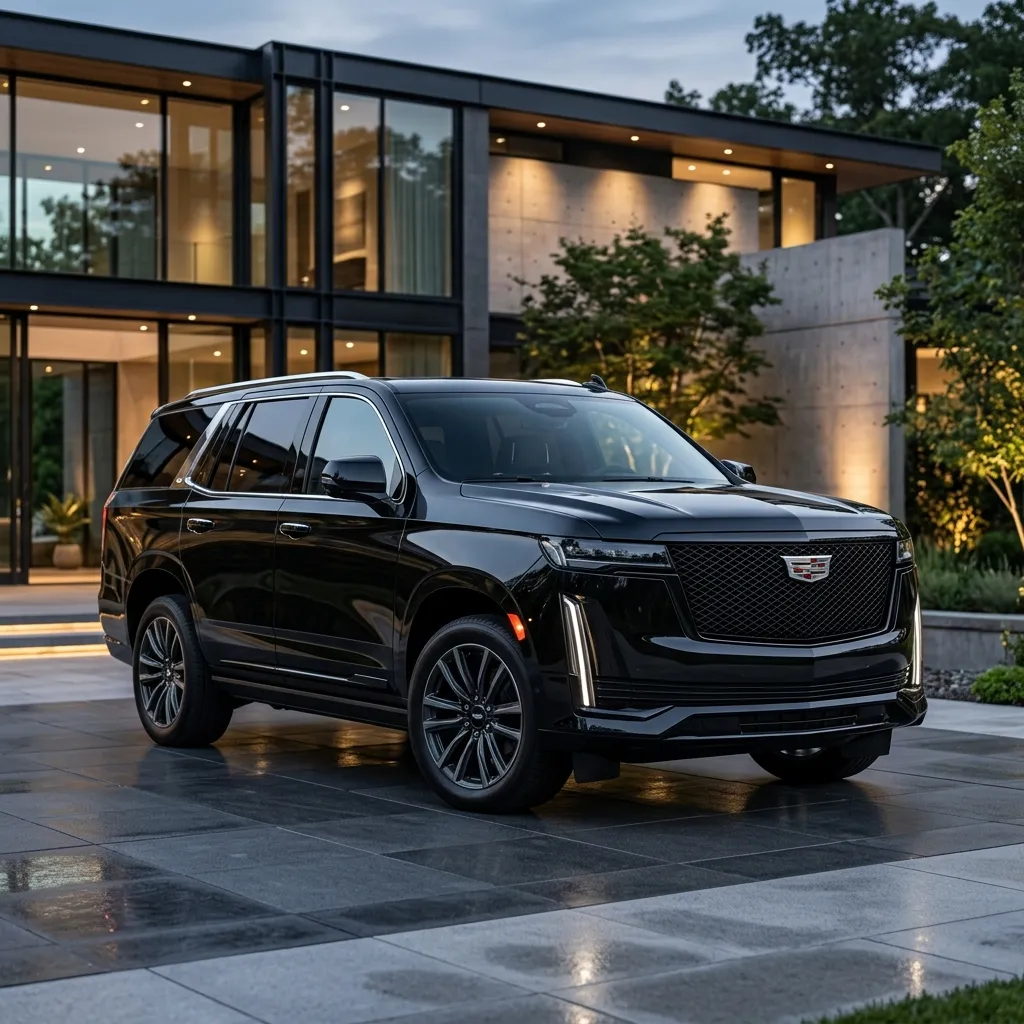
Cadillac Escalade / Lincoln Navigator
6 passengers
6 full-size bags
Executive SUV
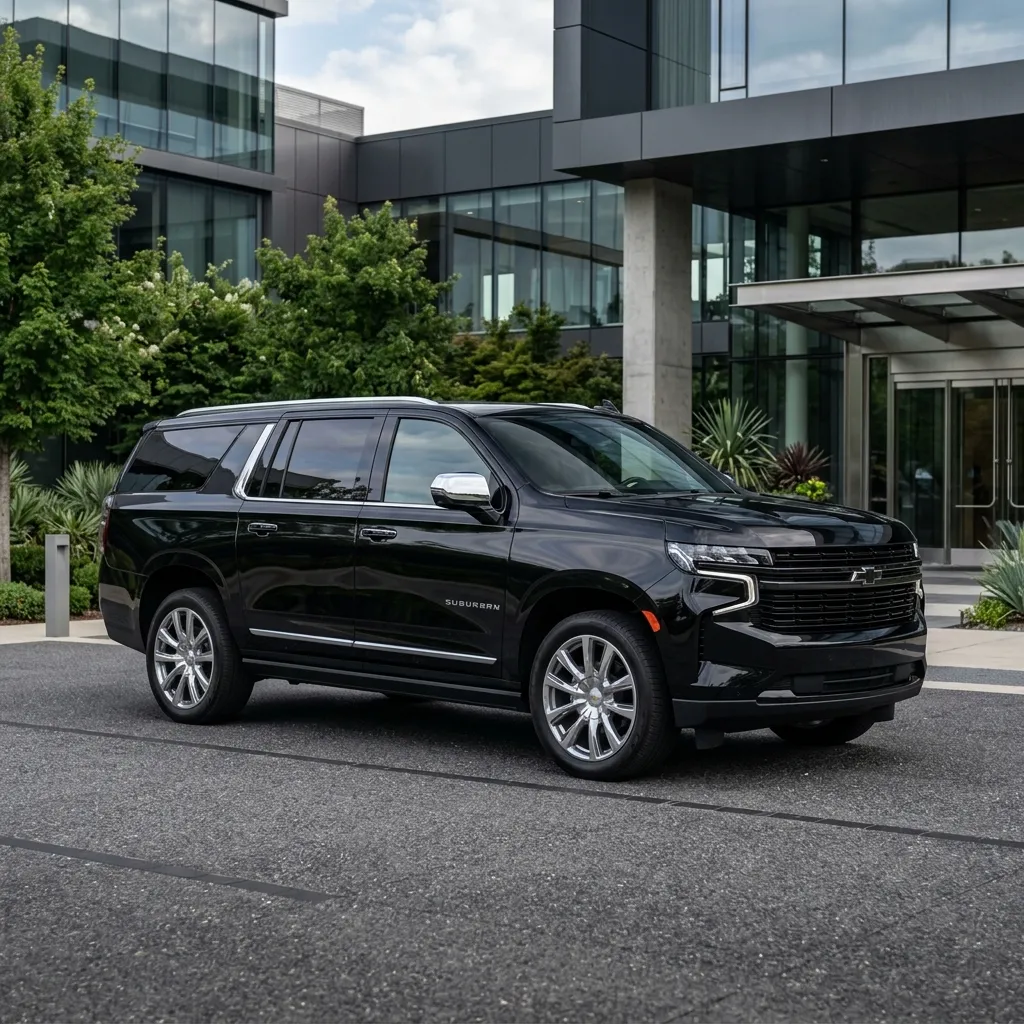
Chevrolet Suburban / GMC Yukon XL
7 passengers
6 full-size bags
Limousine Sprinter
Mercedes-Benz Sprinter Limo Conversion
10 passengers
6 full-size bags
Jet Sprinter
Mercedes-Benz Sprinter Jet Edition
8 passengers
8 full-size bags
Shuttle Sprinter
Mercedes-Benz Sprinter Shuttle
14 passengers
14 full-size bags
Executive Sprinter
Mercedes-Benz Sprinter Executive
14 passengers
10 full-size bags
Event scenarios and how we handle each
Real event logistics involve real-time changes. These scenarios illustrate how the coordinator, dispatch, and the transportation plan work together.
500-person OCCC conference, three-day run
Twelve Sprinters run 15-minute loops between the OCCC West Concourse and six International Drive hotels from 7 AM to 10 PM daily. Four Executive SUVs serve keynote speakers and sponsor executives. Coordinator manages two departure points — one at the West Concourse, one at the North/South Concourses. Post-session airport runs to MCO start at 4 PM on the final day with six dedicated vehicles.
300-guest gala at Vizcaya
Three hotel blocks (Brickell, Coral Gables, Miami Beach) served by four Sprinters on timed arrival loops. VIP arrivals in three Luxury Sedans timed to valet capacity. Post-event departure staged on South Miami Avenue with one-at-a-time loading-lane rotation. The coordinator clears all 300 guests in 15 minutes using destination-priority deployment.
Corporate hospitality at Hard Rock Stadium
Twelve-vehicle fleet stages at the chauffeur lot off NW 203rd Street. Three SUVs pre-position in the premium lot for VIP hosts. Post-event wave-based departure by gate assignment. The coordinator manages guest flow from the hospitality suite to the east gate pickup zone and deploys vehicles in 5-minute waves.
150-guest wedding at a Palm Beach estate
Three Sprinters loop between two Palm Beach hotels (The Breakers and The Colony) and the estate starting 90 minutes before the ceremony. Guests are seated 15 minutes before the processional. Post-reception departures at 11:30 PM with the coordinator managing flow at the estate driveway gate. The couple departs in a decorated Luxury Sedan after the send-off.
Product launch at a Wynwood venue
Controlled arrival: five Luxury Sedans ferry invite-only guests from a Brickell hotel to the venue in 20-minute windows so guests arrive in coordinated groups for the reveal sequence. Post-event departures staged on NW 2nd Avenue. Branded vehicle signage matches the product branding.
Keynote speaker flies in, presents, departs same day
One Executive SUV picks up the speaker at TPA with flight tracking, transfers to the Tampa Convention Center for rehearsal and the session, takes the speaker to a private dinner at Bern's Steak House, and returns to TPA for the evening flight. The vehicle is exclusively theirs for the full day. Coordinator tracks the vehicle from dispatch and updates the event planner at each movement.
How event transportation pricing works
Event transportation is quoted per event after the planning call and site visit. The proposal itemizes every line so the planner sees exactly what each element costs: vehicle type, number of vehicles, hours of service per vehicle, driver count, on-site coordinator hours, and any extras (branded signage, ADA-accessible vehicles, contingency capacity beyond the standard allocation).
Pricing is per-vehicle rather than per-passenger, which typically makes the service more cost-effective than per-head alternatives for groups over 20 guests. A five-sedan three-hour corporate dinner at Vizcaya prices very differently from a fifteen-Sprinter three-day OCCC conference running fourteen-hour days. Multi-day events are broken out per day so the planner can adjust scope for each day independently.
Recurring events — quarterly board meetings at The Breakers, annual conferences at the Miami Beach Convention Center, monthly speaker series at the Adrienne Arsht Center — qualify for contracted rates that reduce per-event cost and guarantee fleet availability during high-demand windows. Non-profit galas and charity fundraisers receive preferred pricing.
Book now using the form below or call +1-305-555-0100 with your event date, venue, and estimated guest count to schedule a planning call.
What is not included in event transportation
Motor coach operators beyond 14 passengers (handled via licensed partners, billed through our proposal)
Custom vehicle wraps and multi-day branding installation (quoted per project)
Alcohol service inside vehicles (not provided; BYO permitted per Florida law)
Parking fees at venues without complimentary event parking
Gratuity for chauffeurs and coordinator (discretionary)
Interstate transport beyond Florida (handled via affiliate network, priced separately)
Request an event transportation quote
Tell us about your event — date, venue, guest count, hotel blocks, and VIP requirements. The event team will follow up within one business day to schedule the planning call.
Book Your Ride
Book your Florida chauffeur in under a minute
Prefer to start by phone? Call +1-305-555-0100 — the event team can scope a preliminary estimate during the first call.
Florida event transportation FAQ
Answers to the most common questions about event logistics, shuttle operations, and venue-specific transportation across Florida.
How many guests can you handle for a Florida conference or gala?
There is no hard upper limit. The fleet runs Luxury Sedans (3 passengers), Executive SUVs (6 passengers), and Mercedes-Benz Sprinter Executives (12 passengers). For events exceeding 12 passengers per vehicle, we dispatch multiple Sprinters or coordinate with licensed motor coach operators. A 500-guest conference at the OCCC typically uses 10-15 Sprinters on rotating loops plus dedicated SUVs for VIPs. We have coordinated events over 1,000 attendees by staging multi-vehicle fleets at multiple venue entrances with separate departure zones.
How far in advance should I book event transportation in Florida?
4-6 weeks for events with 50 or more guests, which provides time for the planning call, the site visit, the written transportation plan, and reserving the correct fleet mix. Smaller events (20-person executive dinners, single-vehicle speaker pickups) can usually be confirmed with 1-2 weeks notice. During South Florida peak season (November through April) earlier booking is recommended because fleet availability tightens around Art Basel, the Fort Lauderdale Boat Show, Orange Bowl week, Palm Beach gala season, and the Formula 1 Miami Grand Prix at Hard Rock Stadium.
Do you provide an on-site coordinator for events at the Miami Beach Convention Center?
Yes. Every engagement with three or more vehicles includes an on-site coordinator who arrives 60-90 minutes before the first scheduled pickup and stays until the last guest departs. At the Miami Beach Convention Center, the coordinator stages at the ground transportation area off Convention Center Drive and communicates with venue security, the event manager, and dispatch on a shared radio channel. The coordinator manages shuttle sign placement, spot-counts boarding at each loop, and directs post-event traffic at the Collins Avenue exit.
How do hotel-to-venue shuttle loops work for a multi-hotel conference?
Shuttle loops run on published intervals — typically every 10, 15, or 20 minutes depending on guest volume and hotel-to-venue distance. A conference at the Miami Beach Convention Center with a 300-guest Fontainebleau block and a 200-guest Loews block runs a three-vehicle loop: Vehicle 1 departs Fontainebleau at :00, Vehicle 2 departs Loews at :00, Vehicle 3 departs the Convention Center at :00 returning to the hotels in sequence. Branded window cards identify each shuttle by hotel. The coordinator spot-counts each departure so dispatch can add capacity or adjust intervals if one loop is consistently full.
Can you split a group across vehicles going to different hotels after the event?
Yes. Multi-destination dispatch is standard for conferences and galas where guests are staying at different hotels. Vehicles are pre-assigned by destination and marked with color-coded or numbered window cards so guests quickly find their ride. The coordinator directs traffic at the departure point. For a Miami Beach conference with a 200-guest Fontainebleau block, a 150-guest Loews block, and a 50-guest St. Regis Bal Harbour block, we dispatch three vehicle streams simultaneously from separate departure columns.
What does VIP and speaker transport include for a Florida conference?
VIP transport is a dedicated vehicle assigned to one person or role for the duration of the event — airport pickup (MIA, FLL, PBI, MCO, TPA), hotel transfer, hotel-to-venue, venue-to-dinner, dinner-to-hotel, and hotel-to-airport. The keynote speaker at a Tampa Convention Center conference gets one Executive SUV from TPA pickup through departure. The coordinator tracks every VIP vehicle from dispatch and knows which is on standby, which is en route, and which is parked at valet, so when the event planner needs the speaker at the stage entrance in two minutes, the vehicle is already repositioning.
How does post-event ride staging work at The Breakers or Vizcaya?
Post-event dispatch is the phase where the transportation plan pays off most visibly. At The Breakers, vehicles pre-stage on the east motor court and the South County Road entrance depending on departure volume; at Vizcaya, the loading lane off South Miami Avenue has strict timing rules so vehicles rotate one at a time rather than queuing. The coordinator directs guest flow at the exit and vehicles deploy by destination — hotel block A, hotel block B, airport, private addresses. A 300-guest gala departure that would otherwise take 45 minutes typically clears in about 15 minutes with staged dispatch.
How is pricing structured for multi-vehicle event transportation?
Quotes itemize vehicle type, number of vehicles, hours of service, driver count, on-site coordinator hours, and extras (branded signage, ADA-accessible vehicles, extended standby). Multi-day events are broken out per day. Pricing is per-vehicle rather than per-passenger, which typically makes the service more cost-effective than per-head alternatives for groups over 20 guests. A five-sedan three-hour corporate dinner at Vizcaya prices very differently from a fifteen-Sprinter three-day OCCC conference running fourteen-hour days. The written proposal shows total event cost and per-unit cost so the planner can adjust scope before approval.
Can I add vehicles or change the shuttle schedule during an event?
Yes, within fleet availability. The on-site coordinator and dispatch can deploy additional vehicles during the event, usually within 30-60 minutes depending on vehicle class. Every plan reserves one or two extra vehicles as contingency capacity beyond the scheduled need. Schedule changes — moving a shuttle by 15 minutes, adding a loop, extending standby, rerouting a VIP vehicle — are handled in real time through the coordinator. Last-minute additions carry a modest surcharge calculated on the vehicle hourly rate.
Do you handle transportation for events at Hard Rock Stadium and Kaseya Center?
Yes. Hard Rock Stadium events use the chauffeur lot off NW 203rd Street for staging and the coordinator repositions vehicles to the east or west gate pickup zone on signal. Post-event departures are managed in waves by gate assignment. Kaseya Center events stage on the NE 8th Street loop with VIP pickups at the Port Boulevard entrance. Both venues generate high-volume simultaneous departures that require pre-staged dispatch rather than on-demand vehicle calls.
What is the difference between event transportation and your wedding shuttle service?
The wedding service page covers ceremony-and-reception logistics for the couple and bridal party. Event transportation covers the group logistics side — shuttling 80-200 guests between multiple hotels and the ceremony site, managing post-reception departures at midnight, and coordinating with the wedding planner on arrival timing so guests are seated before the processional. If you need both the bridal party vehicle and guest shuttles, the event transportation plan covers the full scope under one coordinator.
Can you provide branded shuttles for a corporate conference or product launch?
Yes. Branded signage includes window cards with the event name or company logo, driver name boards with sponsor branding, and coordinated interior cards showing the shuttle schedule. For multi-day activations and product launches, optional vehicle wraps are quoted per project and installed before the first event day. Branded signage at cost is standard; wraps and custom fabrication are billed separately. This is common at OCCC trade shows, Miami Beach Convention Center conferences, and product launches at private estates.
What is the cancellation policy for event transportation?
Free cancellation more than 24 hours before the event. Within 24 hours, billing is at 50% of the quoted total. No-shows are billed at 100%. For multi-day events, partial cancellations (cancelling day 3 of a 3-day event) are handled at the day-level rather than event-total. Force majeure events — hurricane, declared emergency, venue closure — waive the cancellation fee entirely.
Do you provide ADA-accessible vehicles for event guests with mobility needs?
Yes. ADA-accessible vehicles with wheelchair ramps and securement systems are available for any event. Specify the number of accessible vehicles needed during the planning call and they are included in the written transportation plan with designated boarding positions at the venue. At the Miami Beach Convention Center, accessible boarding is at the east-side ramp off Convention Center Drive. At Hard Rock Stadium, accessible pickup is at the designated ADA lot off NW 27th Avenue.
How do you handle a 500-person gala where everyone leaves at the same time?
This is the core post-event staging scenario. Vehicles are pre-positioned by destination 30-45 minutes before the expected end time. Guests exit to a staging area where color-coded or numbered signs direct them to the correct vehicle group. The coordinator manages flow at the departure point and deploys vehicles in priority order — the hotel block closest to the venue departs first while farther destinations load. Contingency vehicles cover any overflow. A 500-guest departure at The Breakers using this staging method clears in approximately 20 minutes.
Can you coordinate with my event planner, venue manager, and caterer simultaneously?
Yes. The on-site coordinator operates on a shared communication channel with the event planner, venue operations team, and dispatch. Before the event, the coordinator participates in the venue walkthrough with the planner and venue manager to align on loading zones, departure timing, and contingency protocols. On event day, the coordinator is the single transportation contact for the planner — they do not need to call dispatch, manage drivers, or track vehicles. This structure is standard at venues like the Adrienne Arsht Center and Perez Art Museum where venue operations has specific vehicle-flow requirements.
On-site coordinator, multi-vehicle dispatch, shuttle loops, VIP tracking, and staged departures — all built around your event agenda and venue. From a 30-person dinner to a 1,000-guest conference, one planning call starts the process.
Serving Miami Beach Convention Center, OCCC, Tampa Convention Center, Hard Rock Stadium, Amalie Arena, Kaseya Center, The Breakers, Fontainebleau, Vizcaya, Ringling Museum, PAMM, Adrienne Arsht Center, and private venues statewide.